The dust rises first. A faint haze on the horizon, lit gold by the early sun. Then the sound arrives, a low rumble that does not feel like noise so much as movement itself.
Within moments, the herd is upon the riverbank, thousands of wildebeest pressing forward in a single restless mass, their hooves striking the earth in a rhythm that has not changed in millions of years.
A crocodile waits in the shallows below. Above, vultures circle. The first animal hesitates at the water’s edge. The herd surges. And then, suddenly, the crossing begins.
You are watching one of the most extraordinary natural events on earth, and you are watching it from a private vehicle parked at exactly the right bend in the river, with no other guests in sight. A flask of coffee sits beside you.
Your guide, who has tracked these herds for two decades, is already pointing to the bull about to lead the next wave. The morning belongs entirely to you.
This is what a luxury safari in Tanzania can become when it is designed by people who genuinely understand both the country and the rhythm of the migration.
Not a tour. Not a checklist. An encounter with one of the wildest spectacles the world has left to offer, experienced with the privacy, comfort, and access that turn a great safari into an unforgettable one.
Understanding the Great Migration
The Great Migration is not a single event. It is a continuous movement, a year-round pulse across the Serengeti and Maasai Mara ecosystems, driven by rainfall, instinct, and the eternal search for fresh grazing.
Roughly 1.5 million wildebeest, joined by hundreds of thousands of zebras and gazelles, follow the rains in a vast clockwise loop through northern Tanzania and southern Kenya.
The herds calve in the southern Serengeti in early spring. They move north through the western corridor in the heart of the dry season.
They face the dramatic river crossings of the northern Serengeti and Mara between July and October. And they return south as the rains begin again.
What makes the migration extraordinary?
What makes the migration extraordinary is not just its scale. It is its unpredictability. The herds move on their own terms, responding to weather patterns and grass conditions in ways that no calendar can fully predict.
To witness the migration at its most powerful, you need to be in the right region at the right moment, and that requires expertise far more nuanced than a standard safari itinerary can provide.
Why Tanzania Offers the Most Refined Safari Experience
Tanzania has long held a quiet reputation as Africa’s most considered safari destination.
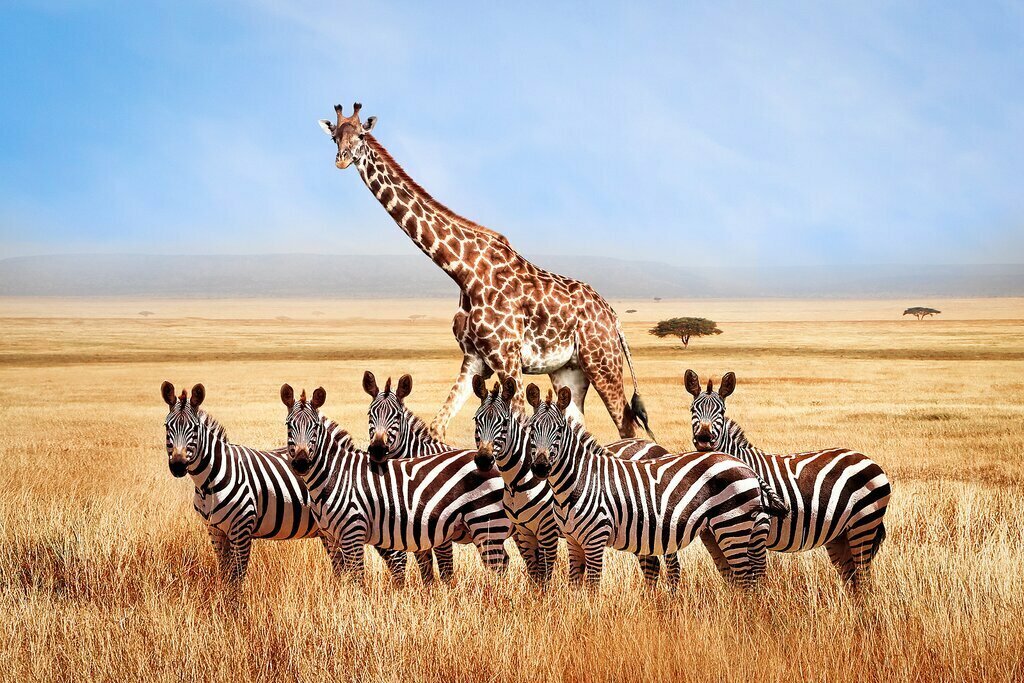
The Serengeti, in particular, offers a combination of scale, biodiversity, and access to remote terrain that few wilderness areas in the world can match.
Serengeti luxury has matured significantly over the past decade. The finest camps are no longer simply comfortable accommodations placed in the bush. They are intimate, design-led retreats built with deep respect for the landscape, often operated by small teams who have lived in this region for generations.
The Tanzanian approach to high-end tourism also tends to favour exclusivity. Private concessions border the main park boundaries, allowing guests to experience the wildlife of the Serengeti without the vehicle congestion that can affect more popular regions.
Off-road driving, walking safaris, and night drives are permitted in many of these private areas, offering experiences that simply cannot be arranged in standard parks.
For travelers who want to witness the migration in a setting that matches the magnitude of the spectacle itself, Tanzania remains the most rewarding choice.
The Difference Between a Standard Safari and a Private Safari Tour
The gap between a conventional safari and a curated one becomes most visible when the migration is the focus of the journey.
A standard safari typically involves shared vehicles, fixed itineraries, and accommodation chosen for its position within a wider tour circuit. You see the herds, often from a distance, alongside other vehicles that have arrived at the same well-known viewing points. The experience is real, but it is shared in a way that diminishes its intimacy.
A private safari tour operates on entirely different terms. You travel in your own vehicle with your own guide, on a schedule shaped by where the herds are at that exact moment. If the crossing is happening at dawn, three hours from camp, your day begins accordingly. If a quieter section of the river is offering better visibility, your guide knows it and takes you there. Your itinerary is not fixed. It is responsive.
The accommodation in a curated experience is equally distinct. Camps are smaller. Service is genuinely personalised. The chefs know your preferences. The structures are often mobile, repositioned across the season to follow the migration itself, ensuring that you are always within striking distance of the action.
This is what separates a great safari from an ordinary one. The privacy. The flexibility. The depth of access. None of which is guaranteed without curation.
When to Experience the Migration
Different phases of the migration offer dramatically different experiences, and choosing the right window depends on what matters most to you.
The calving season, from late January through March, takes place in the southern Serengeti and the Ndutu region. Hundreds of thousands of wildebeest give birth within a few weeks of each other, drawing predators in concentrations that are extraordinary to witness.
Cheetah on open plains. Lions in their prime. The wild theatre of new life and the predation that follows it.
The river crossings, typically July through October, are the most iconic moments of the migration. The Mara and Grumeti Rivers become stages for some of the most dramatic wildlife encounters on earth.
Crocodiles waiting in the water. Wildebeest hesitating at the edge. The chaos and beauty of the crossing itself.
Between these phases, the herds move steadily across the western and northern Serengeti, offering excellent viewing in landscapes that are quieter but still abundant with wildlife.
The right timing matters enormously, and so does the precise positioning of your camps. This is where expert planning shifts the entire experience.
What Defines a Truly Exceptional Luxury Safari
Several elements come together to create a safari that lives up to its possibilities.
- Location and positioning are paramount.
The finest camps are placed strategically along the migration’s path, repositioning seasonally so that guests are always close to the day’s most rewarding wildlife. A camp that is two hours from the action means two hours of every game drive lost to transit.
- Expert guides change everything.
The best Tanzanian guides combine deep tracking ability with a genuine love of teaching. They read the bush, anticipate movement, and turn each game drive into a kind of unfolding story. Time spent with them is some of the most rewarding time you will ever spend in nature.
- Seamless logistics protect the experience.
Light aircraft transfers between regions. Vehicle handovers timed precisely. Customs and visa coordination handled in advance. These details may seem mundane, but they are the difference between arriving alert and arriving exhausted.
- Privacy and personalisation define the texture of the journey.
Private vehicles. Private camps. Personalised meals. The freedom to design each day around your interests rather than around the schedule of a group.
Immersive comfort in the wild is what makes a safari sustainable across two weeks rather than three days.
Beautifully designed tents with proper beds. Hot showers under the stars. Quiet evenings around a fire with stories from the day.
The wilderness should feel raw, but the comfort should feel absolute.
Beyond the Migration
A great Tanzanian safari extends well beyond the herds themselves.
Hot air balloon flights at sunrise drift silently over the Serengeti, offering a perspective on the landscape and the wildlife that no game drive can replicate. The light at that hour. The silence was broken only by the burner. The sense of floating above a continent.
Private bush dinners are arranged in remote clearings, lit by lanterns and surrounded by the sounds of the night.
Cultural visits to Maasai communities, conducted with respect and depth rather than performance.
Slow afternoons spent watching elephants drink at a waterhole, with no schedule pulling you elsewhere.
These are the moments that complete the journey, transforming the safari from a wildlife trip into a deeper kind of immersion.
Why Curation Changes Everything
Tanzania is a country of extraordinary opportunity, but it is also one where the gap between a good safari and a transcendent one is unusually wide. Without expert planning, even a significant investment can produce an experience that falls short of its potential.
At The Luxury Retreats, we approach Tanzania with the depth and care this destination deserves. Our services draw on long-standing relationships with the country’s most respected camps, guides, and operators.
The result is a safari that responds to where the wildlife actually is, not where the brochure said it would be.
Reserve Your Private Safari
For those who wish to witness the migration not as spectators, but as part of a carefully orchestrated journey, a privately curated safari offers a level of access and ease that transforms the experience entirely.
If Tanzania has been calling to you, we would love to help you experience it properly.
Reserve your private Tanzania safari.
Frequently Asked Questions
What is the best time to witness the Great Migration in Tanzania?
The dramatic river crossings occur between July and October, while the calving season in the southern Serengeti unfolds from late January through March, each offering a distinct and remarkable wildlife spectacle.
Is a private safari tour worth it?
Absolutely. A private safari offers your own vehicle, expert guide, and a fully flexible itinerary, allowing you to experience the migration with privacy, depth, and access that shared tours cannot replicate.
What makes Serengeti luxury safaris different?
Serengeti luxury safaris combine intimate camp settings, exceptional guiding, and access to private concessions where off-road driving, walking safaris, and night drives are permitted.
How long should a Tanzania safari be?
A meaningful safari typically spans seven to ten days, allowing time across multiple regions of the Serengeti and the chance to experience both the migration and the wider wildlife of northern Tanzania.
Are luxury safaris suitable for couples and photographers?
Very much so. Curated safaris are particularly well-suited to couples seeking privacy and to photographers who require unhurried time, expert positioning, and the flexibility of a private vehicle.